
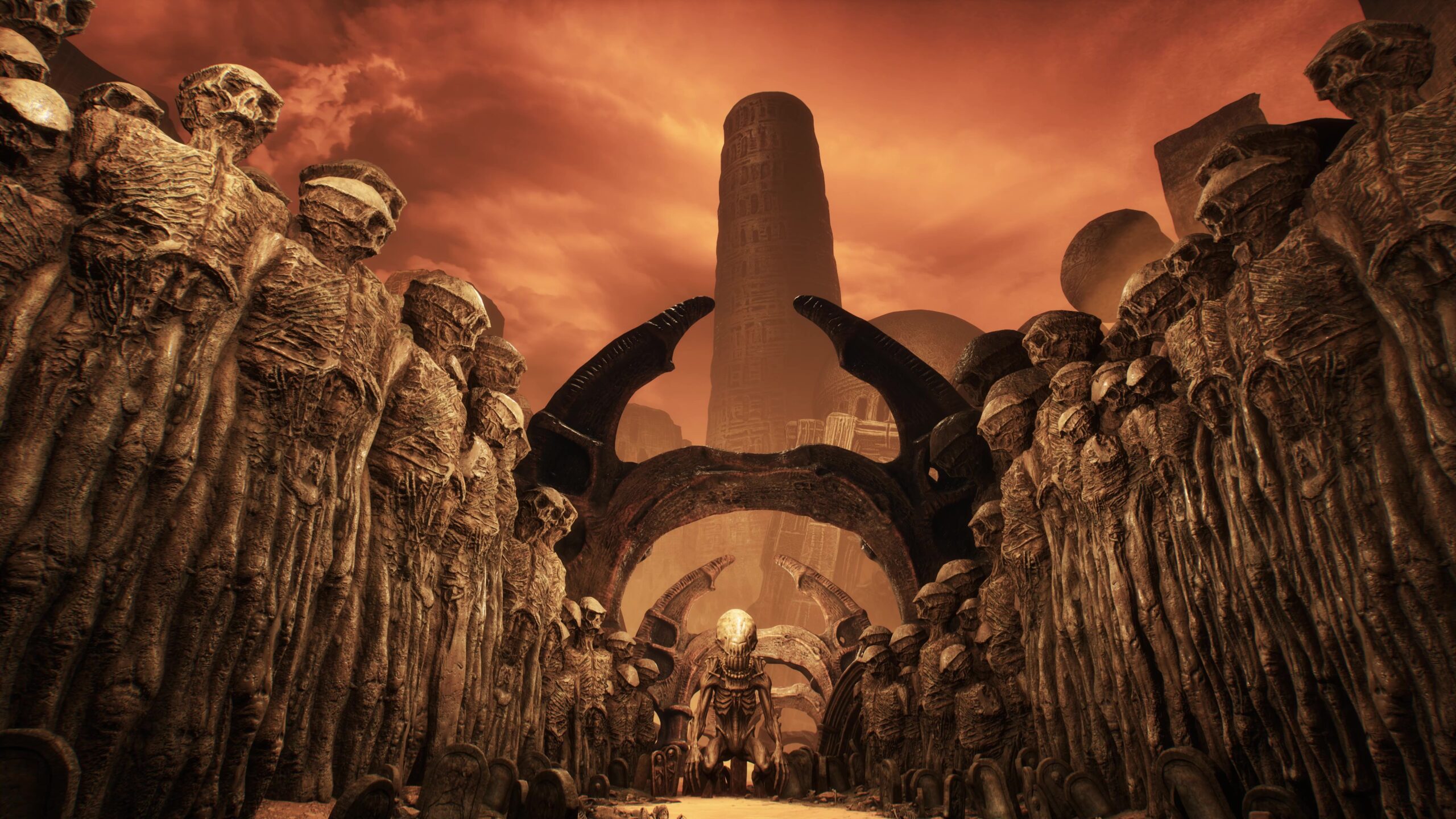

There are games like Necrophosis that aim to create an atmosphere that unsettles players on psychological and artistic levels. Developed by Dragonis Ares and Adonis Brosteanu, Necrophosis is less concerned with survival horror conventions and more interested in dragging players through a grotesque dreamscape where death has consumed everything. The result is a deeply atmospheric walking simulator that feels equal parts art exhibit and existential nightmare.
A World Drenched in Dread
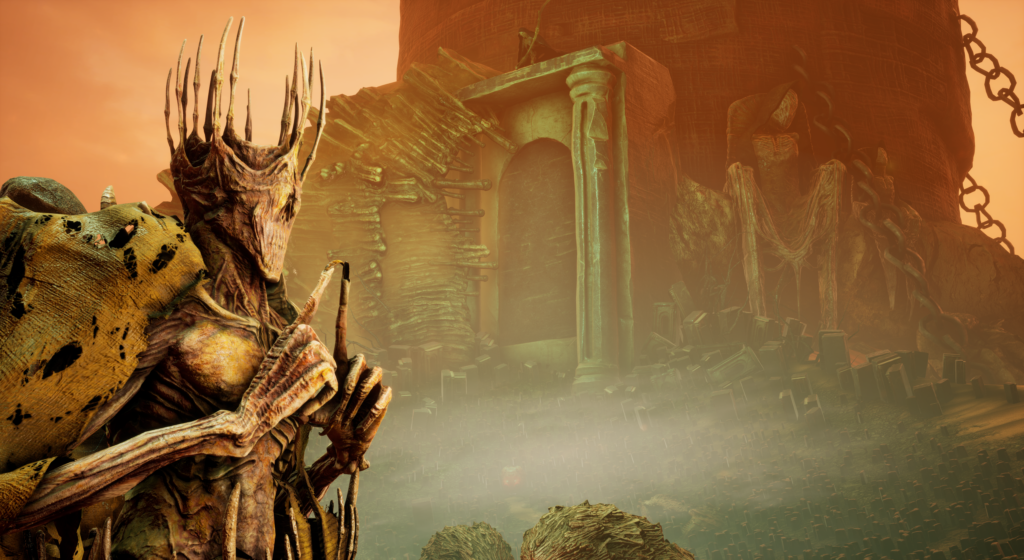
The biggest strength of Necrophosis is undoubtedly its visual design. Every environment looks like it was ripped directly from the works of Lovecraftian and a few other cosmic horror genres layered throughout. Towering monuments made of flesh and bone loom over endless wastelands while grotesque creatures twitch and stumble through the ruins of existence.
Simply walking through this world is captivating. The game constantly feeds players bizarre imagery that inspires both disgust and fascination. There is a surreal beauty to its decay. At times, it genuinely feels like wandering through a living nightmare painted onto a canvas.
The sound design elevates that atmosphere even further. Wet squishes, cracking bones, distant groans, and unsettling ambient music create an oppressive audio landscape that lingers long after you step away. Some sequences are accompanied by haunting throat singing and cryptic narration, giving the journey an almost ritualistic quality. Few indie horror games commit to atmosphere this completely.
What makes Necrophosis stand out from similar walking simulators is how confidently it embraces slow, deliberate pacing. This is not a game interested in action or traditional scares. Instead, it wants players to absorb the environment, interpret its symbolism, and lose themselves in its dreadful beauty. Of course, players will be solving puzzles to unravel some of the mysteries and explore the lore and what has happened.
Cryptic Storytelling
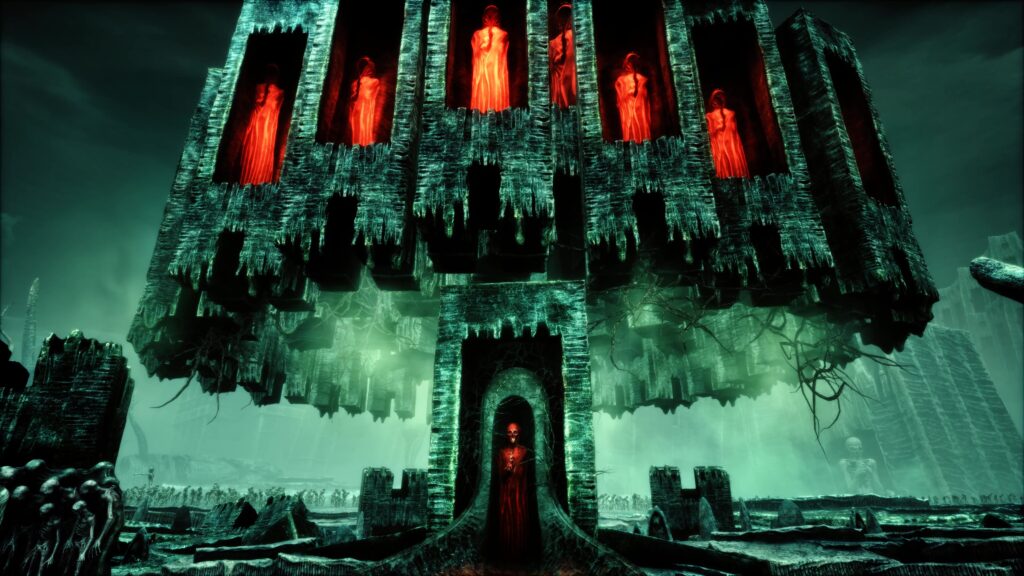
Narrative delivery in Necrophosis leans heavily into poetic dialogue and environmental storytelling. The game drip-feeds its lore through haunting monologues, obscure interactions, and cryptic text that often feels more philosophical. Players looking for straightforward storytelling may find themselves frustrated, but those willing to engage with its ambiguity will discover an experience that lingers in the mind.
The puzzles themselves are fairly simple overall. Exploration is the key to progression, and most solutions come down to carefully examining your surroundings for interactive objects or subtle environmental clues. While some puzzles initially appear cryptic because of the game’s bizarre aesthetic language, they rarely become overly difficult.
That said, the experience is not flawless. Character animations occasionally feel stiff, and some movement cycles lack polish. Certain interactions can come across as amateurish compared to the otherwise exceptional art direction. Thankfully, those issues are relatively minor in the grand scheme of the experience.
The bigger sticking point for some players may be the game’s short runtime. Necrophosis can be completed in just a few hours, and whether its asking price feels justified will depend entirely on how much value players place on atmosphere and artistic ambition over gameplay depth.