
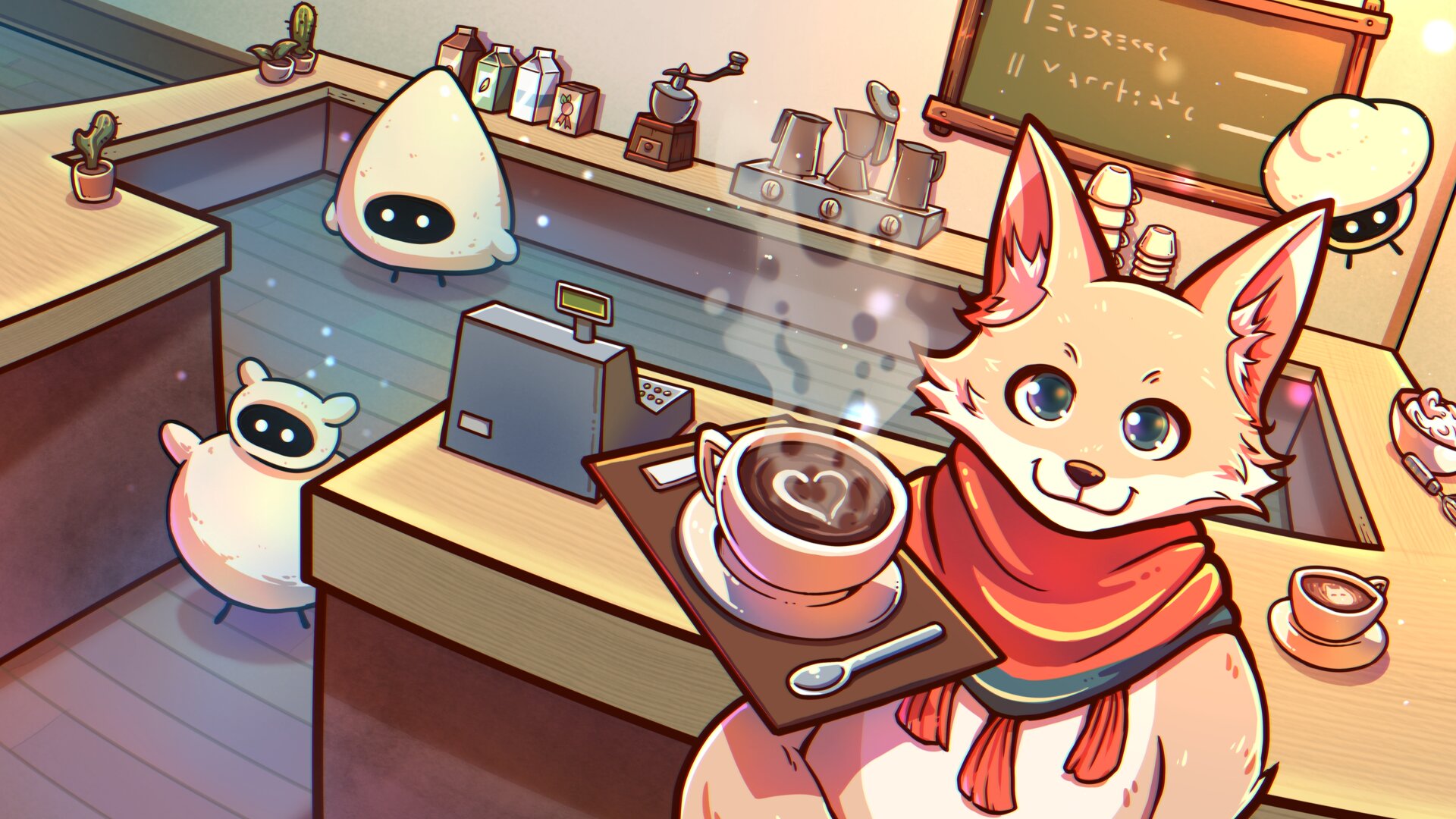

Tailside: Cozy Cafe Sim is a nice, simple, relaxing game the moment you start playing. You are here for a good time, and not a stressful time. You step into the paws of a fox barista who has just moved into a small town, hoping to make a name for themselves one cup of coffee at a time. Developed by solo creator Coffee Beans Dev, this Early Access title aims to be a gentle, low-pressure escape, and for the most part, it succeeds.
From the soft color palette to the calming soundtrack, everything about Tailside feels designed to lower your blood pressure. The town has that familiar cozy vibe seen in games like Animal Crossing or Stardew Valley, but with a narrower focus on running and decorating a cafe. I went in expecting something closer to Overcooked or Diner Dash with frantic multitasking and escalating difficulty. Instead, I found a game that almost dares you to slow down and just enjoy the moment.
That initial tone sets expectations well. If you are coming into Tailside looking for a challenge, you will probably feel underwhelmed. If you are looking for a way to unwind after a long day, this game immediately makes a strong case for itself.
Gameplay and Modes
At the time of this review, Tailside offers two main modes: Sandbox Mode and Campaign Mode. Sandbox Mode strips away objectives entirely and focuses purely on decoration and serving, allowing you to play at your own pace. There are no goals to chase, no story beats to hit, and no pressure to optimize anything. It is essentially a digital zen garden with coffee.
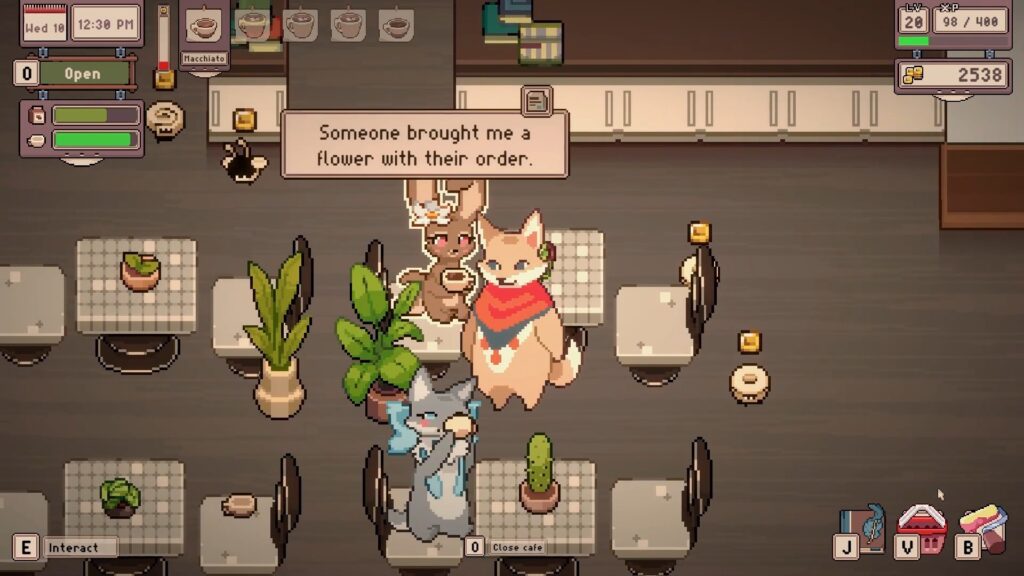
Campaign Mode is where I spent most of my time. While still relaxed, it offers a light sense of progression and structure. Each in-game day introduces you to new townsfolk or expands on existing characters through short interactions before or after your shift. There is also a gentle drip-feed of new mechanics, decor options, and menu items that slowly broaden what you can do.
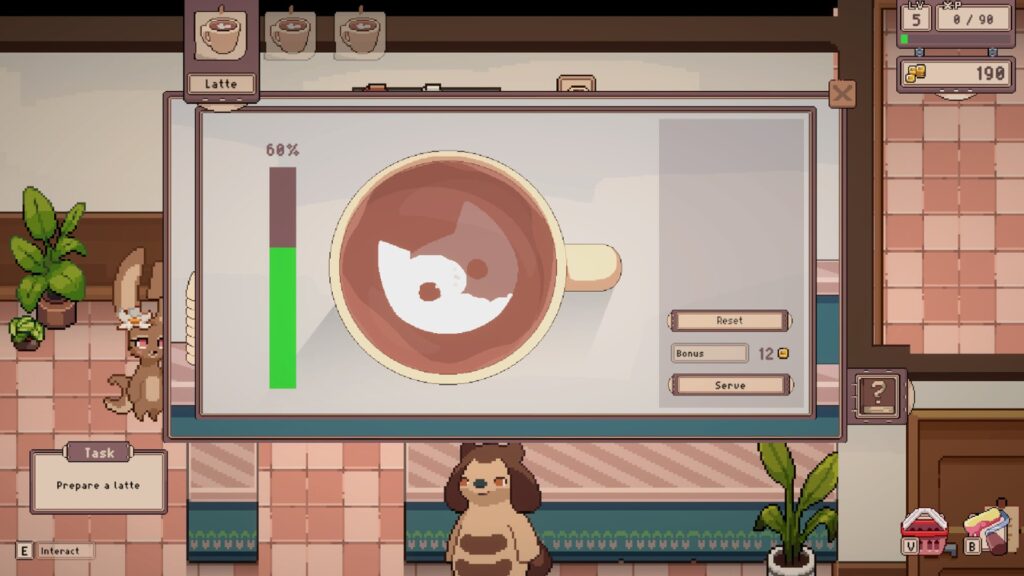
The core loop is simple. You open your cafe, serve drinks to customers, clean up afterward, and then spend skill points or currency on upgrades and decor. Brewing coffee involves selecting the right beans, flavors, and strength, with optional latte art for those who want to add a bit of flair. The process is intuitive and forgiving, with no penalties for mistakes or delays. Customers will wait as long as it takes, and there is never a risk of losing money due to slow service.
That approach makes the game extremely accessible. I never felt overwhelmed, even during longer play sessions. However, that same lack of pressure also means the gameplay rarely evolves beyond its initial rhythm. Once you understand how to make drinks and manage the day cycle, there are a few surprises waiting for you.
Relaxing, But Perhaps Too Relaxed
Tailside fully commits to its cozy identity, but that commitment comes with trade-offs. The absence of urgency, failure states, or meaningful consequences makes the game feel almost meditative at times. That is not inherently a bad thing. In fact, it is exactly what some players will want. But over longer sessions, I started to feel the repetition set in.
During my Campaign Mode playthrough, I made it through roughly ten in-game days with only minor changes to my menu and setup. While I unlocked new recipes and decor, none fundamentally altered how I played. Each day felt very similar to the last, and there was little incentive to push myself to optimize or experiment beyond personal curiosity.
Players who enjoy cozy games often appreciate routine and familiarity, but even within that genre, there is usually some sense of escalation or evolving complexity. In Tailside, the progression is more cosmetic than mechanical. You unlock new drinks, new furniture, and new characters, but the core gameplay loop remains unchanged.
The lack of challenge also affects the sense of accomplishment. Completing a day feels pleasant, but not particularly rewarding. There is no tension to release, no big payoff to look forward to. It is simply another calm day in your cafe, which can be charming in small doses but may struggle to hold attention over extended play.
Upgrades, Customization, and Progression
One area where Tailside shines is customization. The game offers a wide range of decor options, allowing you to shape your cafe into a space that reflects your personality. From seating arrangements and color schemes to plants, signs, counters, and even multiple areas like a bedroom or terrace, there is plenty to tinker with.
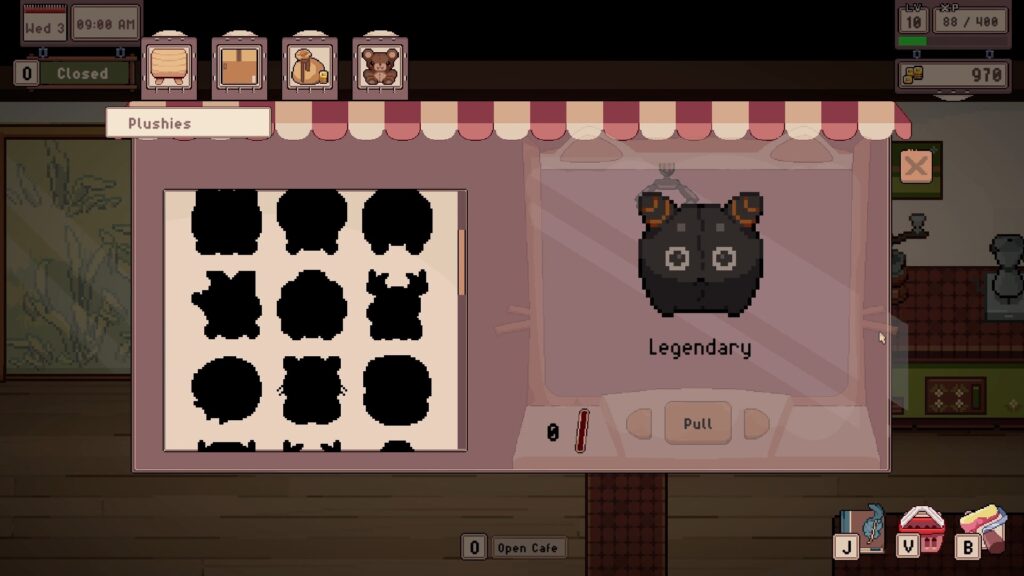
Upgrades are handled through two systems: skill points and in-game currency. Skill points are earned after completing workdays and can be spent in your journal on things like new furniture, plushies through a claw machine-style gacha system, and menu unlocks. Currency, on the other hand, is used primarily through the recipe book to improve cafe efficiency. These upgrades include expanding milk and espresso storage, unlocking pastries, and repairing parts of the cafe to create additional decorating space.
While the range of options is impressive, the impact of these upgrades is relatively subtle. Increasing storage capacity or adding pastries does not significantly change how the game plays. It simply adds more variety to what you can serve. That variety is welcome, but it does not address the underlying simplicity of the gameplay loop.

One particularly nice feature is the game’s support for mods and custom characters. You can import your own designs or even turn yourself or your pet into an in-game visitor. This adds a personal touch that few cozy sims offer, and it is likely to become one of the game’s strongest community-driven features over time. For players who enjoy personalization and creative expression, this could add significant replay value.
Story, Characters, and Atmosphere
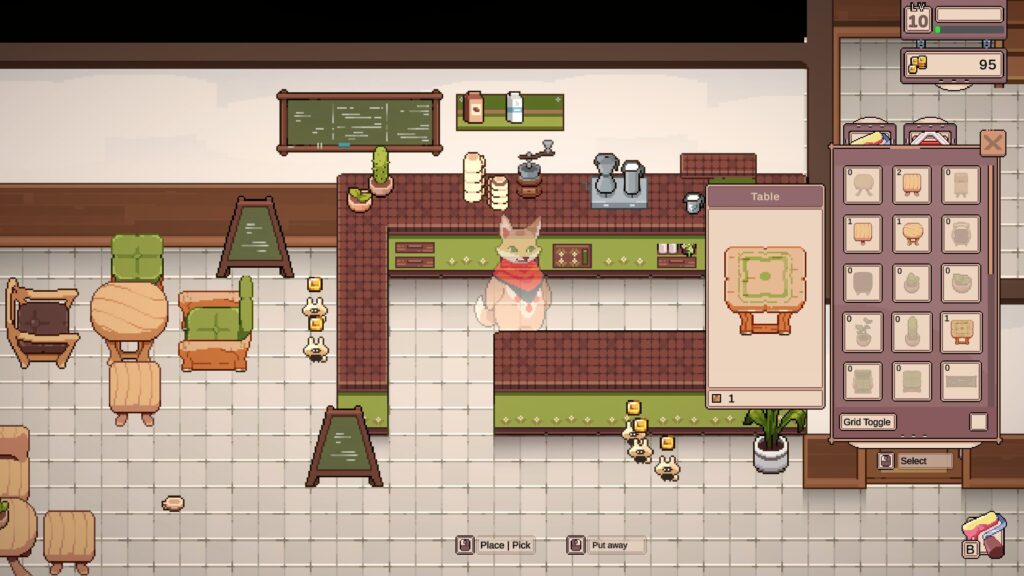
Tailside’s story is light, gentle, and intentionally low-stakes. You are not saving the town, uncovering dark secrets, or navigating complex relationships. Instead, you are meeting friendly animal villagers, learning small details about their lives, and slowly becoming part of the community. These interactions are delivered in short conversations, often tied to specific days or milestones.
While charming, the story lacks depth. Characters are likable, but they rarely evolve beyond their initial impressions. Conversations are brief, with little branching dialogue or meaningful choices. As a result, the narrative feels more like background flavor than a driving force.
That said, the atmosphere carries much of the emotional weight. The art style is soft and inviting, with warm lighting and cozy interiors that make your cafe feel like a safe space. The music complements this perfectly, providing a calming backdrop that never becomes intrusive. Even mundane tasks like wiping tables or arranging furniture feel soothing thanks to the game’s presentation.
One small but notable annoyance is cleaning. Customers leave messes behind, and while the game notifies you when cleanup is needed, there are no upgrades to streamline the process. It is not difficult or punishing, but it does become tedious over time, especially given the otherwise relaxed pace of the game.
However, players looking for depth, progression, or meaningful challenge may find themselves wanting more. The repetitive gameplay loop, limited story development, and minimal mechanical evolution make it difficult for the game to sustain long-term engagement. While Early Access leaves room for growth, the current experience feels more like a relaxing toy than a fully fleshed-out simulation.
Still, there is something undeniably appealing about Tailside’s simplicity. In a gaming landscape often dominated by complexity and competition, it offers a quiet corner where nothing is urgent, and everything can wait until tomorrow. Sometimes, that is exactly what you need.