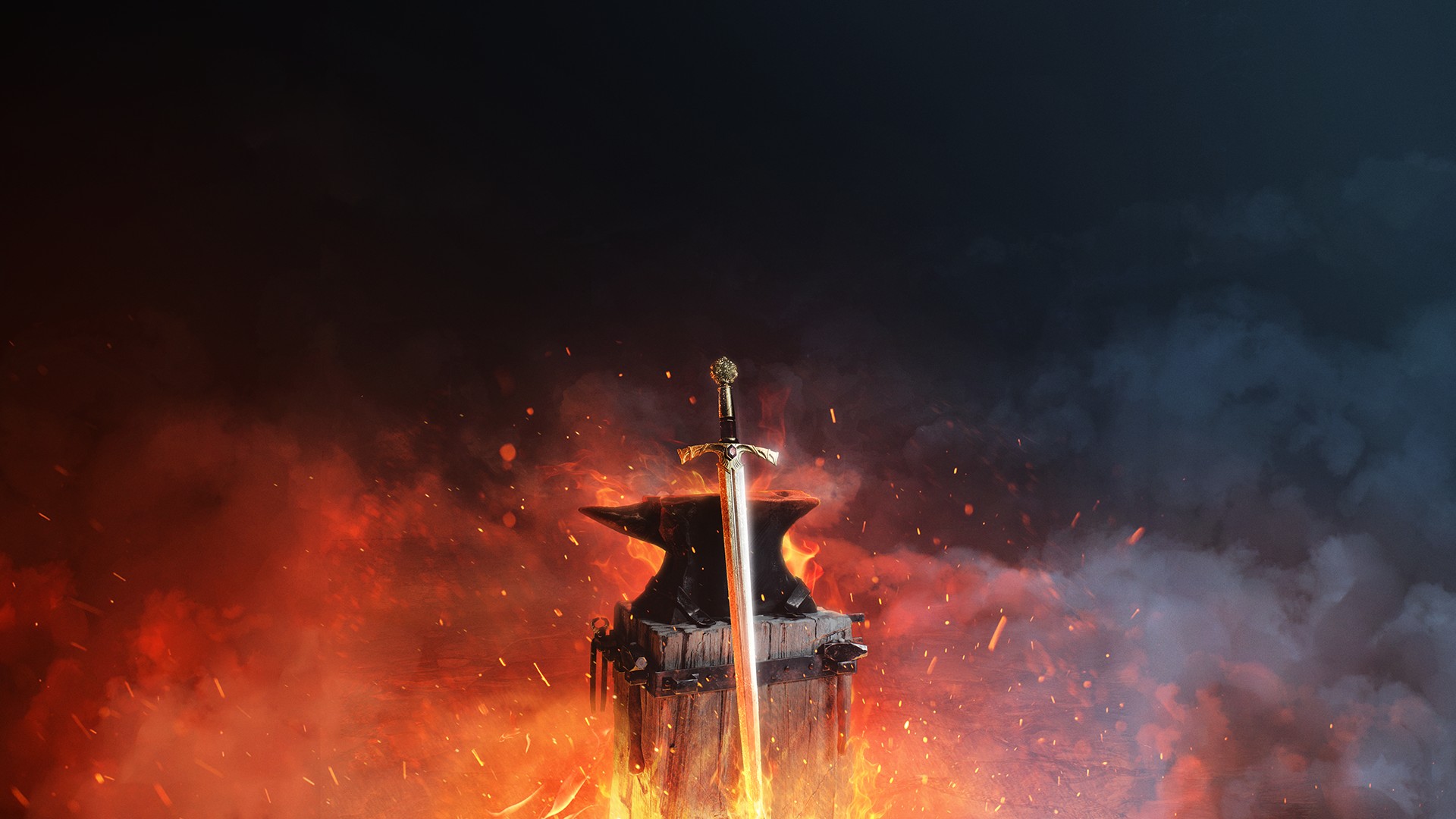

Sun and Serpent creations’ of Bladesong is not the blacksmith simulator you might expect. It does not aim to meticulously recreate every real-world step of forging from raw ore to polished blade, which I hope it did. Making it a more in-depth process would bring me closer to my dream of an Isekai anime in the Blacksmith genre. Instead, it offers something far more narrative-driven, a hybrid between crafting game and story-focused RPG where swords are both tools of survival and symbols of power. After spending time in the forge and the streets of Eren Keep, you will forge your path in Bladesong. It is less about hammering metal and more about shaping destiny, one commission at a time.
Bladesong does not hand its systems to you all at once. It takes patience, but once it clicks, the experience flows with confidence and purpose. Let’s get into it. This is one of those non-action games I kind of like.
A Narrative RPG Disguised as a Crafting Game
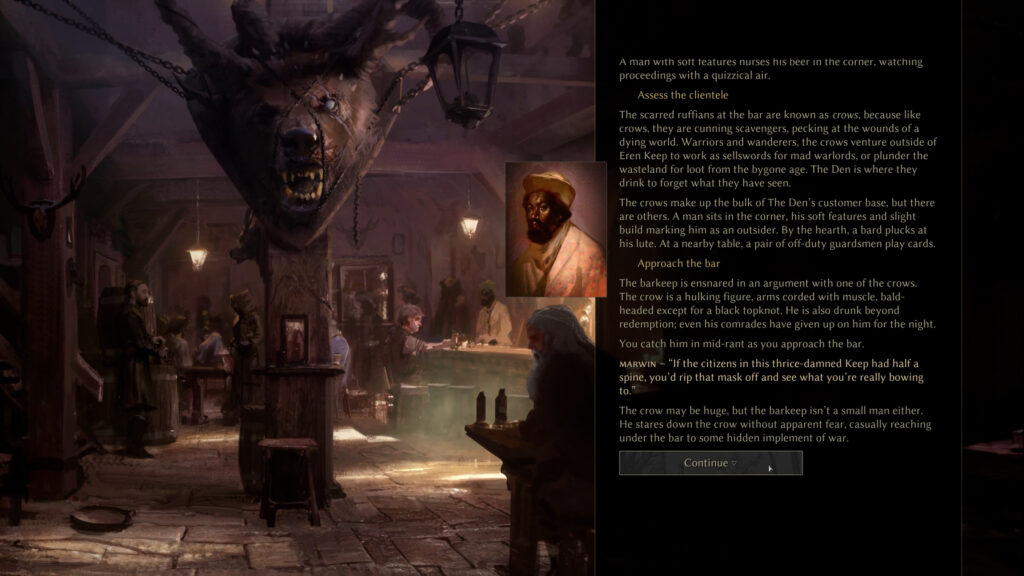
Bladesong opens in a world where the Songs have fallen silent and civilization clings to survival behind the walls of Eren Keep. The Masked King rules with absolute authority, both tyrant and savior depending on who you ask. Into this fragile ecosystem steps you, the new swordsmith, replacing a predecessor who vanished under mysterious circumstances. The game wastes little time establishing that your role is not merely to supply weapons, but to serve as a quiet force in a larger political and emotional struggle. You will begin outside the keep, trying to work your way in or talk your way in. Make friends, and pray that you can survive the night.
This is where Bladesong separates itself from traditional blacksmith simulators. While crafting is central, the game is fundamentally a narrative RPG. The city is filled with characters who feel like more than quest dispensers. Warriors, nobles, scholars, and mercenaries all approach you with specific needs, but also with personalities, ambitions, and secrets. Over time, your forge becomes a crossroads where stories intersect, alliances form, and tensions rise.
At first, the pacing can feel slow. The early in-game days are spent learning systems, meeting NPCs, and fulfilling simpler commissions. It took me roughly two in-game days for the narrative rhythm to settle and the experience to flow naturally. Once it does, the game becomes surprisingly absorbing. Dialogue choices, commission outcomes, and faction relationships flow pretty easily and make the experience immersive, making your role as a swordsmith feel quietly powerful.
Forging and Crafting

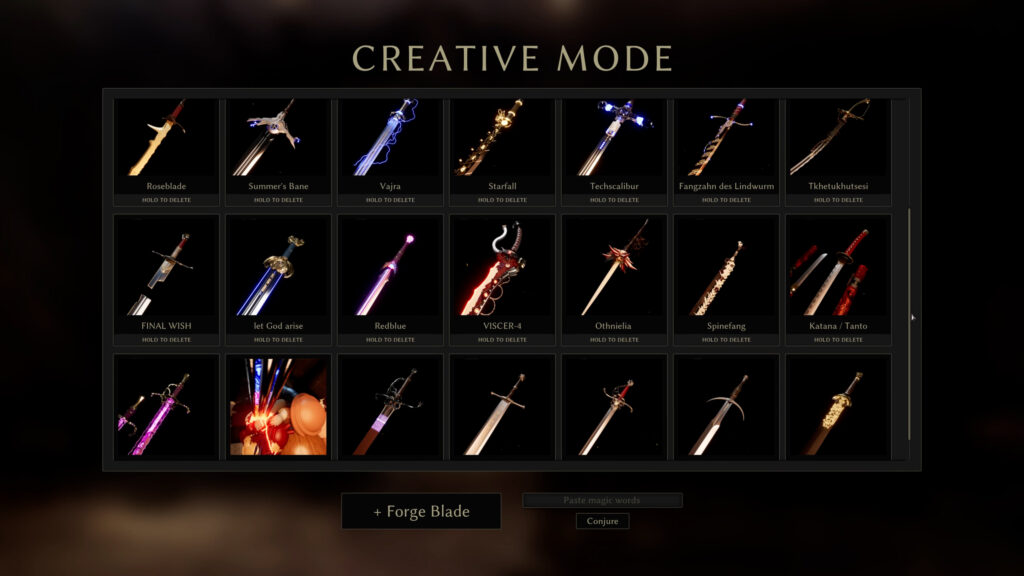
The heart of Bladesong lies in its forging system, which offers an impressive degree of freedom without becoming needlessly complex. You can forge nearly any type of weapon you desire, provided it fits within the parameters of the commission. This is especially noticeable when crafting weapons for NPCs, where specific stats, styles, and materials are required. While the game does not simulate real-world metallurgy in exhaustive detail, it provides enough depth to make each blade feel intentional and personal. Though there is a creative mode, which I have not dived into, but considering the name, I am sure you can create whatever blade you desire, hopefully something like a Frostmourne.
The modular system is one of the game’s greatest strengths. Blades are constructed piece by piece, from pommel to guard to blade shape, with materials ranging from steel and obsidian to ivory and leather. Every decision affects not just appearance, but also performance. Damage, balance, parry rating, and handling are influenced by your design choices, and the game encourages experimentation rather than punishing mistakes. You will unlock more of the aspects of the sword by completing quests from NPCs, buying the books, or talking to NPCs. Your talent tree will also unlock certain aspects of the skills needed for certain types of forging.
This is not a hardcore blacksmith experience. Bladesong understands its role as a narrative RPG first and a crafting game second. The forging mechanics are approachable enough to avoid alienating players, while still offering enough nuance to reward those who take the time to learn the systems. I found myself growing attached to certain blades, even those destined to leave my hands, simply because of the care and thought invested in their creation.
There is a quiet satisfaction in meeting a client’s exact specifications and knowing that your craftsmanship directly influenced their fate to some extent within the game’s narrative. Whether forging a ceremonial blade for a noble or a brutal weapon for a mercenary. The game strikes a careful balance between creative freedom and narrative structure, allowing players to express themselves while still serving the story.
Managing Resources and Relationships
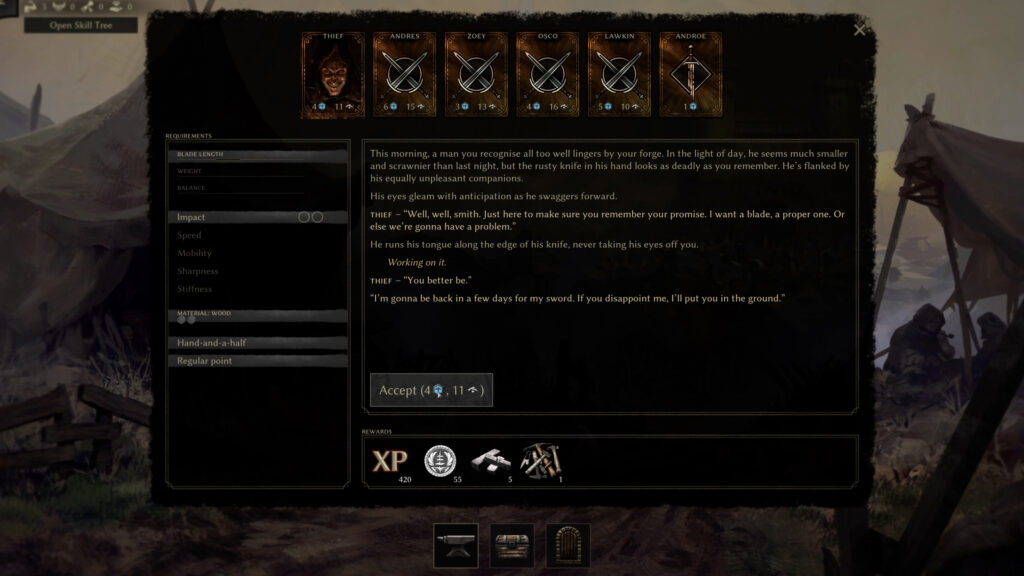
Bladesong is not only about crafting, but also about management. Resources are limited, and your ability to acquire better materials is tied directly to your relationships with NPCs and factions. Managing your funds, unlocking new characters, and expanding your access to supplies become essential parts of progression.
Early on, you will feel the pressure of scarcity. Materials must be purchased, commissions must be completed efficiently, and mistakes can cost both time and money. This creates a subtle layer of tension that mirrors the fragile state of Eren Keep itself. You are not operating in a land of abundance, but in a city barely holding together under the weight of despair and authoritarian rule.
Unlocking NPCs is one of the more rewarding aspects of the game. Each new character brings unique resources, skills, or storylines, and many have ambitions that extend beyond the forge. Some want power, others seek redemption, and a few simply want to survive. Investing in these relationships does more than improve your supply chain. It enriches the narrative and adds emotional depth to your role within the city.
Bladesong does an admirable job of tying progression systems into its story. Earning money is not just about upgrading your forge. It is about maintaining influence, supporting allies, and sometimes choosing between profit and principle. There are moments when a commission offers a tempting reward but comes with moral implications, and the game trusts players to weigh those choices without heavy-handed consequences.
The faction system further deepens this dynamic. As you craft blades for groups like the scavenging Crows or the scholars of the Magisterium, you become entangled in their visions for the future. These relationships feel organic rather than mechanical, and your growing influence can attract both admiration and suspicion. The Masked King’s gaze is never far, and the game does an excellent job of making you feel both important and vulnerable.
Atmosphere, Art, and the Weight of Steel
Visually, Bladesong leans into a stylized, illustrated aesthetic that enhances its somber tone. Locations around Eren Keep are beautifully rendered, from the bustling Citadel Square to the dimly lit tavern known as The Den. Each area feels distinct, yet united by a shared sense of decay and resilience. The art style complements the narrative, emphasizing both the beauty and the brutality of the world.
The character portraits are particularly effective. They convey emotion, personality, and history without excessive dialogue. A tired mercenary’s haunted eyes or a noble’s cold smile can tell a story before a single word is spoken. These visual cues reinforce the emotional stakes behind each commission and make interactions feel more personal.
The ambient music is subdued and melancholic, reinforcing the sense of loss that permeates the broken, grim world. The absence of grand, heroic themes feels intentional. This is not a story about saving the world with a single blade, but about surviving in a broken one. The subtle clang of metal in the forge and the murmur of the city outside create an atmosphere that feels grounded and immersive.
Performance-wise, Bladesong runs smoothly and maintains a consistent presentation. The interface is clean and functional, though some menus take time to fully understand. Once familiar, navigation becomes second nature, and the systems work together cohesively. The game does not overwhelm with unnecessary complexity, but it also does not oversimplify its mechanics.
Creative Mode and community features add longevity to the experience. Being able to forge without limits and share creations through Magic Words encourages experimentation and community engagement. While Campaign Mode provides the emotional core, Creative Mode offers a playground for players who want to push the crafting system to its limits.